
Currently Empty: ₹0.00
Introduction
Pollination is one of the most important processes in plants that helps in reproduction and formation of fruits and seeds. But many students find it confusing to remember different types of pollination.
๐ In this blog, weโll explain pollination in easy language, share fun tricks to remember, and provide images/diagrams to make learning super simple.
ย
What is Pollination?
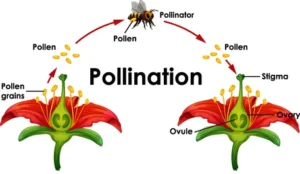
Pollination is the transfer of pollen grains from the anther (male part) of a flower to the stigma (female part) of the flower.
ย
Types of Pollination
There are two main types:
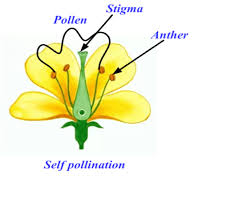
1. Self-Pollination
Pollen is transferred within the same flower or between flowers of the same plant.
Example: Pea, Rice, Wheat.
Trick to Remember:
“Self is selfish โ it doesnโt go to other plants.”
ย
ย
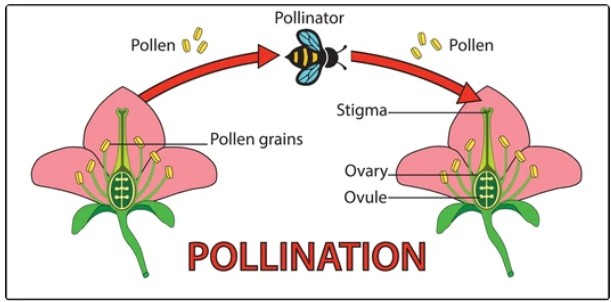
2. Cross-Pollination
Pollen goes from one plant to another plant of the same species.
Example: Mango, Apple, Sunflower.
Trick to Remember:
“Cross = Exchange” โ pollen travels across different plants.
ย
Agents of Pollination
Cross-pollination requires help from agents. These are:
Wind (Anemophily) โ Light pollen grains are carried by air. ๐ฌ๏ธ
Example: Maize, Coconut.
Trick: โAir makes maize dance in hair.โ
Water (Hydrophily) โ Pollen floats on water. ๐ง
Example: Vallisneria, Water Lily.
Insects (Entomophily) โ Bees, butterflies carry pollen. ๐๐ฆ
Example: Sunflower, Rose.
Trick: โInsects love colors and nectar.โ
Birds (Ornithophily) โ Hummingbirds, sunbirds. ๐ฆ
Example: Hibiscus, Coral plant.
Animals (Zoophily) โ Bats, squirrels, etc. ๐ฆ๐ฟ๏ธ
Pollination & Parts of Plants โ 20 Question Quiz
Choose the correct answer for each question. When you click Check Answers your selected option will turn green for correct and red for wrong.
Made for classroom use โ feel free to edit questions or styling.